China's Lijian-1 Y13 rocket successfully carries 5 satellites to space

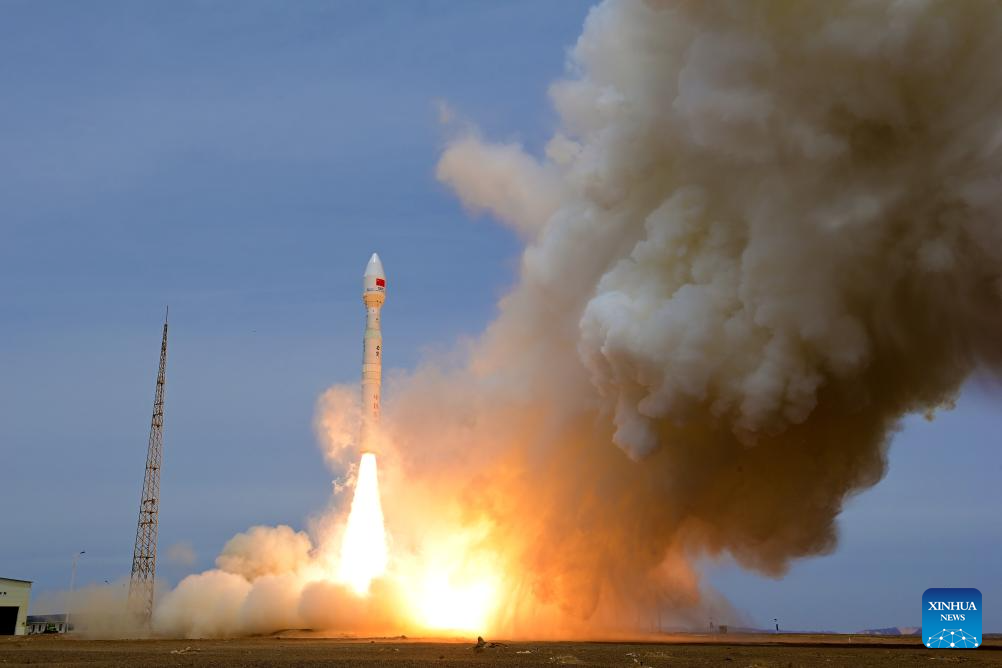
A Lijian-1 Y13 carrier rocket with five satellites onboard blasts off from the Dongfeng commercial space innovation pilot zone in northwest China, May 15, 2026. The rocket blasted off at 12:33 p.m. (Beijing Time) and successfully transported the satellites to their planned orbits. (Photo by Wang Jiangbo/Xinhua)
JIUQUAN, May 15 (Xinhua) -- China on Friday launched a Lijian-1 Y13 carrier rocket that sent five satellites into space.
The rocket blasted off at 12:33 p.m. (Beijing Time) from the Dongfeng commercial space innovation pilot zone in northwest China. It successfully transported the satellites to their planned orbits.
The mission marked the 13th flight of the Lijian-1 carrier rocket and the 14th launch of the Lijian series. To date, the Lijian series has successfully sent a total of 100 satellites into space, with the total mass of payloads placed into orbit exceeding 18 tonnes.
The Lijian-1, developed by CAS Space, is a solid-fuel carrier rocket featuring rapid-response capabilities. It adopts a universal platform-based design, enabling diversified adaptation between the rocket body and satellite missions, according to the company.
The Tianyan-27 satellite, also known as Youxi, launched in this mission, is equipped with a space display screen, a space surveillance camera, an infrared camera and an onboard intelligent processing payload.
It will conduct in-orbit verification of new infrared remote sensing technologies, as well as missions including in-orbit display and selfie-taking, and intelligent data processing.
CAS Space said it will continue to deepen work in key areas such as modular overall optimization design, rocket recovery and reuse, and whole-rocket health monitoring and maintenance. ■

A Lijian-1 Y13 carrier rocket with five satellites onboard blasts off from the Dongfeng commercial space innovation pilot zone in northwest China, May 15, 2026. The rocket blasted off at 12:33 p.m. (Beijing Time) and successfully transported the satellites to their planned orbits. (Photo by Wang Jiangbo/Xinhua)

A Lijian-1 Y13 carrier rocket with five satellites onboard blasts off from the Dongfeng commercial space innovation pilot zone in northwest China, May 15, 2026. The rocket blasted off at 12:33 p.m. (Beijing Time) and successfully transported the satellites to their planned orbits. (Photo by Wang Jiangbo/Xinhua)
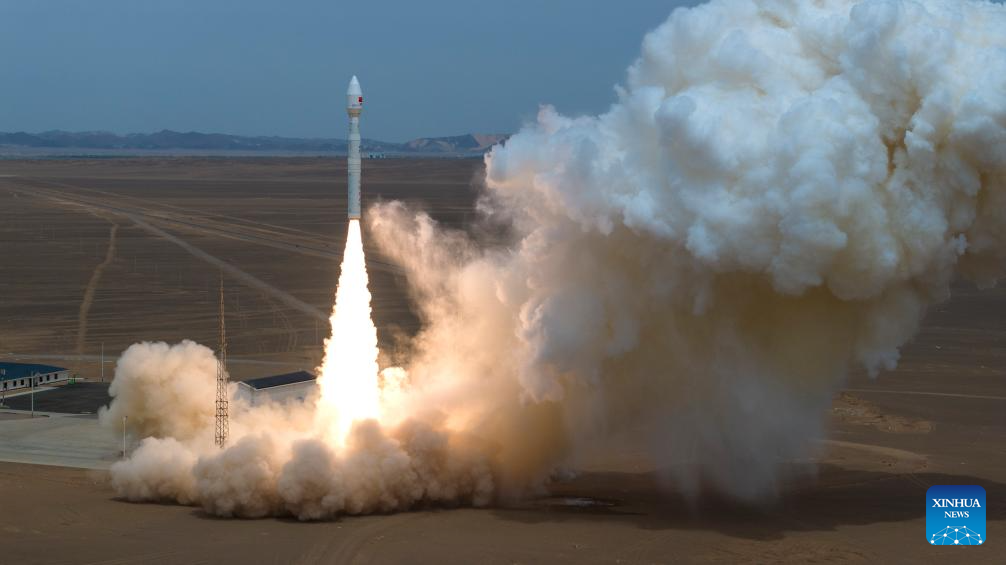
A Lijian-1 Y13 carrier rocket with five satellites onboard blasts off from the Dongfeng commercial space innovation pilot zone in northwest China, May 15, 2026. The rocket blasted off at 12:33 p.m. (Beijing Time) and successfully transported the satellites to their planned orbits. (Photo by Wang Jiangbo/Xinhua)

A Lijian-1 Y13 carrier rocket with five satellites onboard blasts off from the Dongfeng commercial space innovation pilot zone in northwest China, May 15, 2026. The rocket blasted off at 12:33 p.m. (Beijing Time) and successfully transported the satellites to their planned orbits. (Photo by Wang Jiangbo/Xinhua)


